The following are the stages of making weaving and pahikung by the people of East Sumba, NTT. I. Yarn Production/Procurement In the past, ikat weaving thread was made from cotton. The dried cotton pods were picked and dried in the sun. The husks were removed and the seeds removed. The seeds could be removed by […]
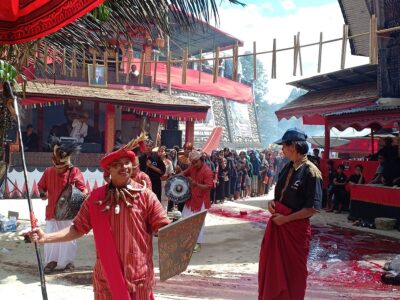
The origin of the Ma’katia dance art in Rambu Solo’ is not known for certain and known from previous ancestors as a tradition inherited from the ancestors of the Toraja people. There are many ways to reveal the patterns of life or the human journey. Traditional art is often used as a medium of expression […]
Yohanes Korang, a man from Banga’ Village, Rembon District, Tana Toraja Regency, is the only buffalo bone craftsman in Toraja. He makes various types of crafts using materials from buffalo bones. For example, statues that resemble humans or in Toraja language are called tau-tau as well as necklaces and bracelets. Korang started doing this when […]
We’re unraveling the secrets of one of our favorite companions: the sarong.It’s not just a piece of fabric; it’s a chameleon of versatility. We’re about to show you how to rock your sarong in fabulous ways – as a dress, skirt, top, kimono, beach essential, and even a chic scarf. So, grab your sarongs, and […]
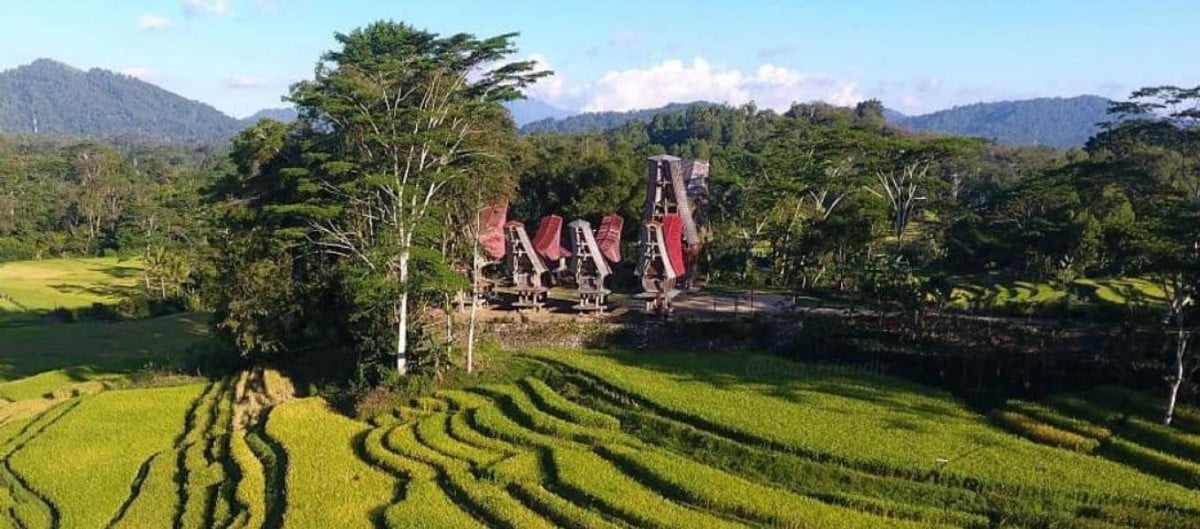
It is no stranger to hearing about the Toraja or Toraja tribe. Most local and foreign tourists know that the Toraja tribe has a wealth of unique traditions and culture, one of which is Rambu Solo. The Toraja tribe itself lives in North Toraja and Tana Toraja Regencies in South Sulawesi Province, Indonesia. We will […]
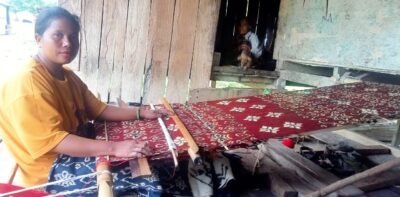
Woven cloth as one of the traditional products in Toraja is now being developed in a village in Tana Toraja. This Pa’ruki weaving is made in four days at a price of IDR 1 million to IDR 2 million. The work process starts from the thread hearth (Pa’renden) and this is the most difficult level, […]
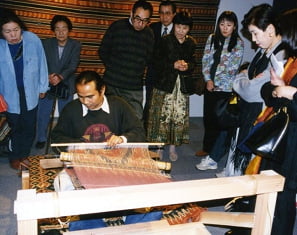
–In memory of the late Bunga Yohanis– by Keiko Kusakabe, July 4, 2014 In 1999, a Torajan group was invited to introduce cultures such as dance, song and textiles to the annual Indonesian festival “Pasar Malam” held in The Hague, the Netherlands. Among them, Papa’Eka (Bunga Yohanis), who later became the owner of Rantepao’s textile […]
Tie-dyeing, method of dyeing by hand in which coloured patterns are produced in the fabric by gathering together many small portions of material and tying them tightly with string before immersing the cloth in the dyebath. The dye fails to penetrate the tied sections. After drying, the fabric is untied to reveal irregular circles, dots, […]
Currently, there are around 15 (fifteen) original motifs of Sekomandi’ Weaving which are still being made or produced by craftsmen, especially Sekomandi’ Weaving craftsmen in Kalumpang, they are: No. Motif Pattern Meaning 1). Ulu Karua Barinni (Ba’ba Deata) This is the first motif made by the Sekomandi woven craftsmen and means the unity of the […]
The best known, and the most visually striking, Sulawesi ikat textiles are those made by the Toraja people, who occupy the mountainous central part of the island. Unfortunately we know little about them, as practically no one paid any attention to them before the onset of the 20th C., and there are few old examples […]
- 1
- 2